
 Menu
Menu


1. Information on insects that attack yarn & knitwear.
2. How to remove insects from yarn & knitwear .
3. How to store knitting yarn & knitwear.
4. How to wash wool, alpaca, mohair, angora, silk and other hand knits.
 Insect Attack
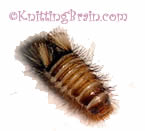
You probably know that moths, or more specifically the clothes moth caterpillar can attack knitwear, but have you heard of Wooly Bears? These are the larvae of the carpet beetle, they're 4-5mm long, hairy and will eat your lovingly made knitwear
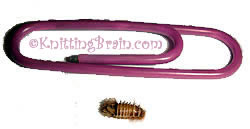 The photo is of one that was eating one of my mohair jumpers! I've shown it next to a standard size paperclip to give an idea of scale.
The problem started when I had a bird's nest in my loft. I was warned to get it cleared out as soon as the fledglings had gone to avoid getting bitten by starling mite, but no one warned me about wooly bears. Apparently they live in bird's nests, but when the nest is empty they migrate in search of new food sources.
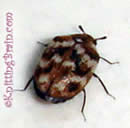 Having feasted on some of my childhood soft toys that were stored in the loft they found their way into my built in wardrobe. So if you've had bird's nesting in your roof I would recommend you check your knitwear. They will attack wool and any other animal fibre.
My first sign of trouble was spotting a brown 'husk' on a pale coloured jumper. On closer inspection it was a shed skin and the culprit wasn't far away.
Getting Rid of Insects in Yarn & Knitwear
Thankfully they hadn't done much damage. A thorough clean of the wardrobe and washing all the knitwear in the effected area was the first step. (See below for instructions on how to wash knitwear.)
I had some items I didn't want to wash, such as unfinished knitting projects and my yarn stash, so these went through a few freeze-thaw cycles to kill anything that might be lurking. I sealed them in plastic bags and put them in the freezer for a couple of days followed by 2-3 days at room temperature. I repeated this a couple of times.
My new storage regimen should help prevent further attacks.
Storing Knitwear and Knitting Yarn
Storing knitwear in sealed boxes or bags when not in use reduces the risk of insect attack.
Always wash and thoroughly dry your knitwear before you store it away. Soiled knitwear is more attractive to insects.
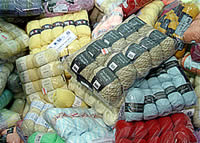 The use of some kind of moth repellant is advisable. Red cedar wood moth repellents or lavender bags are a much nicer smelling and non-toxic alternative to old fashioned moth balls.
The same is true for storing knitting yarn. Any yarn with animal fibre in it is liable to insect attack, so storing it in a sealed box or bag will save a lot of hassle in the long run.
Hanging knitwear on coat hangers can cause sagging and can distort the shape of the shoulders. It's worth folding them carefully and storing them in a drawer when in use and in a sealed box or bag for long term storage.
Washing Knitwear
Unless you've used superwash wool or a robust synthetic yarn you'll need to wash your finished knitting with care.
Dissolve a few soap flakes/washing powder in a little hot water. (Don't use too much or it will take forever to rinse out!) When dissolved add cooler water until the water is barely lukewarm.
Submerge your knitting in the water and allow to soak for a couple of minutes.
Handle your knitting with care while wet, remember that rubbing and heat both cause wool and some other animal fibers to felt. Work methodically across the garment gently squeezing the fabric. Support the weight of the knitting as you remove it from the water. Very gently squeeze out the soapy water. Do not wring the fabric.
 Rinse by submerging in plenty of barely luke warm water (containing fabric conditioner if desired). Support the weight of the knitting as you remove it from the water and again gently squeeze out as much water as possible.
It's important to dry knitting as quickly as possible to avoid it smelling musty or getting mildew. Roll it in a towel and squeeze gently (I stand on the towel). Repeat with fresh towels if needed until the knitwear is as dry as you can get it.
Leave the garment to dry flat after gently pulling it to its correct shape and smoothing the fabric. For lace knits or items that require more severe reshaping see our article on blocking your knitting.
You can use an electric fan to increase the air flow and help the knitting to dry faster.
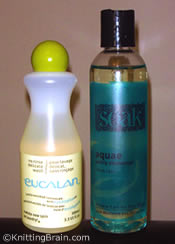
If you use Eucalan wool wash then you don't need to rinse it out and it has the added benefit of Eucalyptus or Lavender extract to repel moths and lanolin to soften the wool.
If your knitwear isn't made of wool you could go for a product like 'Soak' that is also rinse-free.
